Loading game…
Click anywhere to start
Backgammon Classic
Play Backgammon Classic, a free online backgammon board game with the full doubling cube. Roll the dice, race your fifteen checkers home, hit blots to send them to the bar, offer doubles, and bear off first to win - with gammon and backgammon scoring, against computer bots or in local 2-player on one device. No online multiplayer, no download, no sign-up.

Lakeview Angler
Snake Rush
2048

Checkers Classic
Carrom Rush
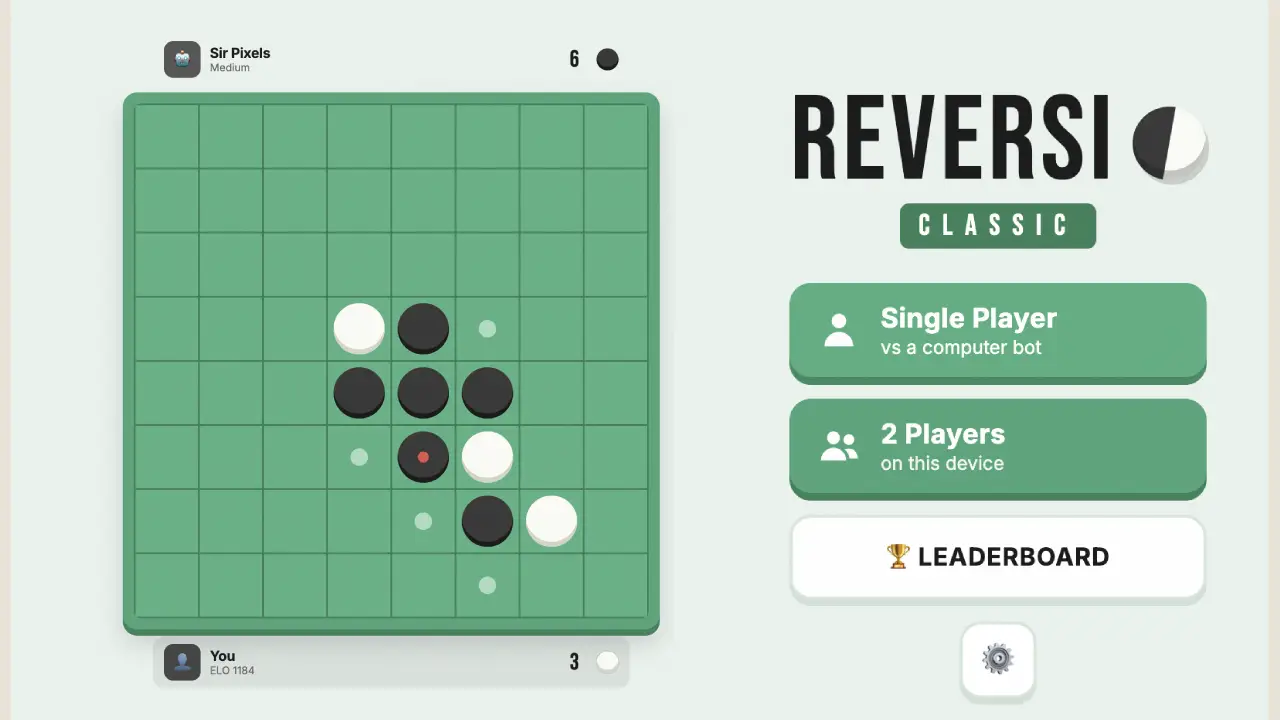
Reversi Classic

Cricket Clash
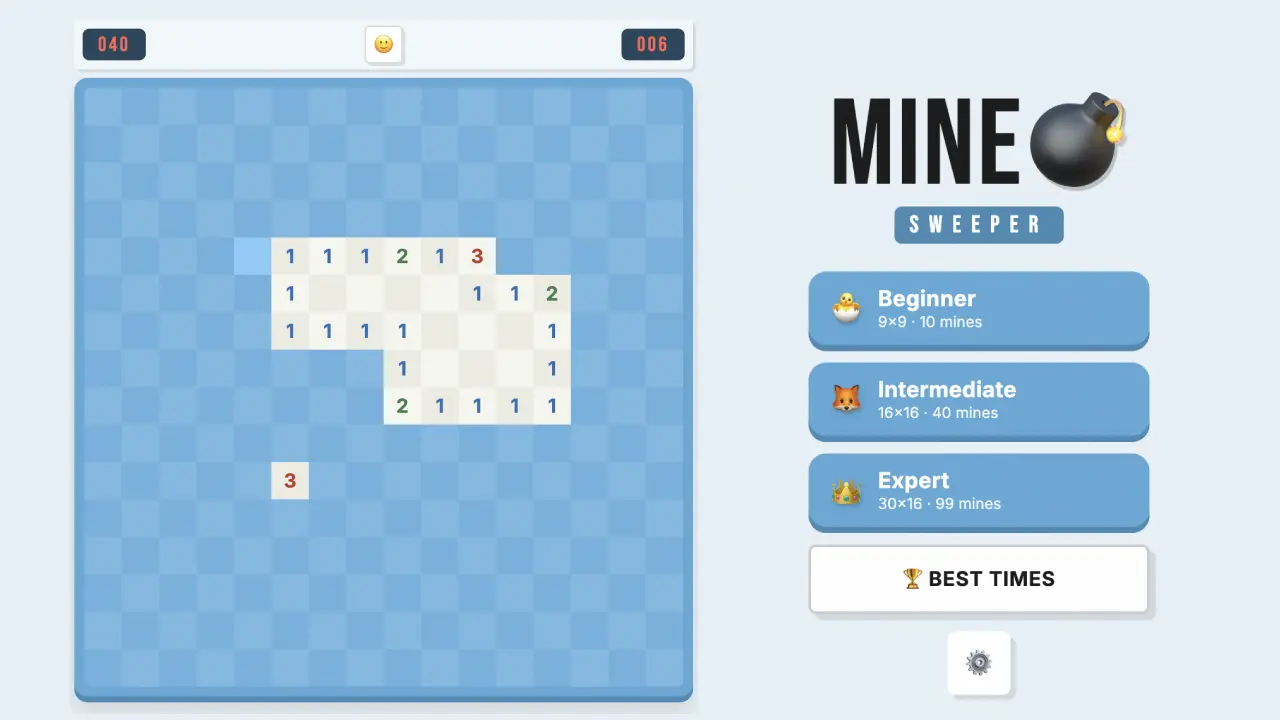
Minesweeper Classic
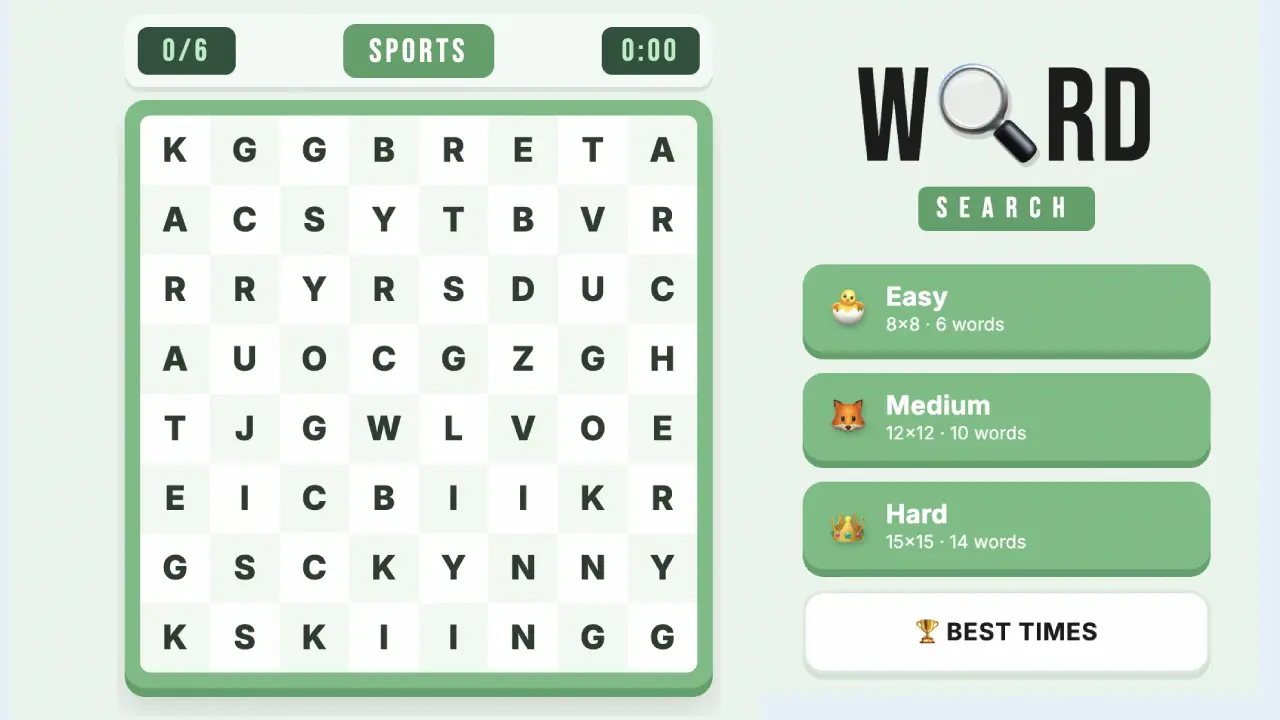
Word Search
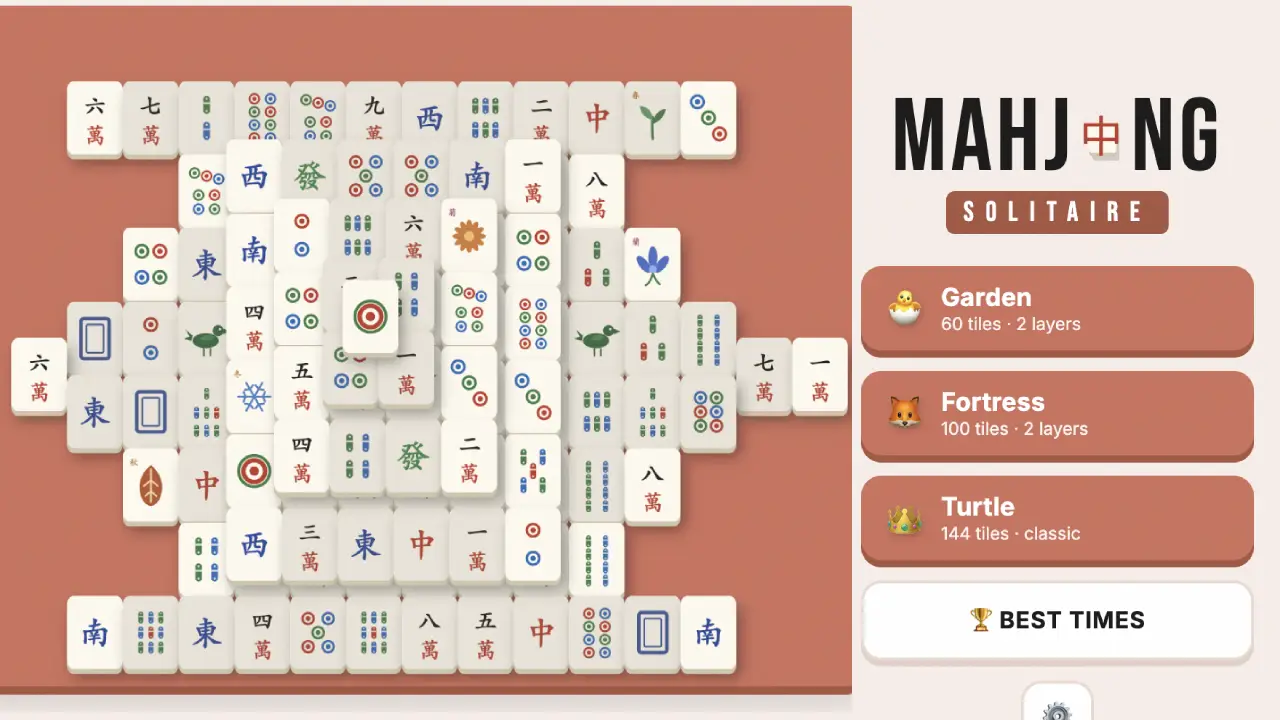
Mahjong Solitaire
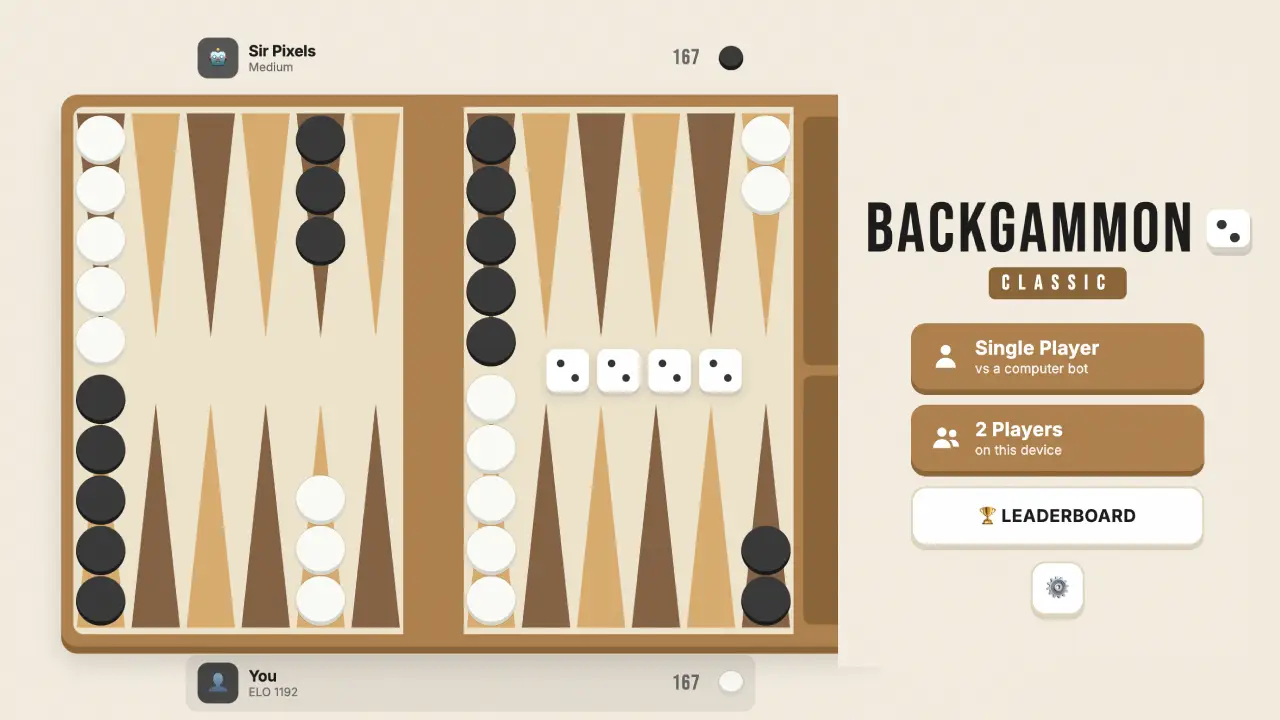
Backgammon Classic
Shogi
Euchre
Dominoes
Typing Practice
FreeCell Solitaire

Wild Bounty: Hunter 3D
Gomoku

Canasta

VoxelGun.io
Daifugo
Pinochle
Mini Golf Rush 3D
3D Basketball Rush
8 Ball Legend
Chess
Four in a Row
Zombie Survivor
DeveloperBrave Games
ModesSingle player · Local 2-player
ReleasedJuly 2026
TechnologyHTML5
PlatformBrowser (desktop & laptop)
How to Play
Backgammon Classic is a free online version of one of the world's oldest board games — known as tavla in Turkey, tavli in Greece, and nard across Iran and much of the Middle East. Two players race their fifteen checkers around the board in opposite directions: roll two dice, move by the numbers shown, land on a lone enemy checker to send it to the bar, and be the first to bear all fifteen off. The pip count for both sides is tracked right on screen — each player starts at 167 — so you can always see who's ahead in the race. It runs in your browser with no download and no sign-up, so it loads in seconds on any desktop or laptop browser. In single player you face a computer bot opponent — each bot carries a skill label (such as Beginner), and your own ELO rating starts at 1200 and moves with your results — while 2-player mode is a local hot-seat match for two people on one screen. The full doubling cube is here too — a feature most free browser versions skip: offer a double before you roll, take or drop when the cube is turned against you, and score gammons and backgammons for double and triple stakes. A Reset Turn button, a full move list, resignation, and a leaderboard round it out. There's no online multiplayer — just instant classic backgammon in HTML5.
Browser Controls
- Roll & Move: Each turn you roll two dice, then move your checkers that many points — click or tap a checker to play it. You can split the two numbers between two different checkers or play both with one.
- Double: Hold cube rights on your turn and a Double ×N button appears beside Roll — click it before rolling to offer the double. If your opponent doubles you, choose Take to play on for raised stakes (the cube becomes yours) or Drop to concede at its current value.
- Reset Turn: Changed your mind mid-turn? Reset Turn puts your checkers back where they started this turn, so you can play the same roll a different way before passing the dice.
- Resign & Rematch: Use Resign to concede a lost position, then start a fresh match with Play Again from the results screen.
- Move List: The move list records the whole game as it's played, so you can review exactly how a win (or loss) was built.
- Settings: Toggle music, dice and checker sounds, and visual effects (particles and animations) any time from Settings.
Special Rules
- Doubles: Roll the same number on both dice and you play that number four times — double fives means four separate five-point moves. A well-timed double can swing a race in a single turn.
- Hitting & the Bar: A point holding a single checker is a blot. Land on an enemy blot and it's hit — sent to the bar — and its owner must re-enter it in your home board before making any other move.
- Blocked Points: Two or more of your checkers on a point own it, and enemy checkers can't land there. Owning several points in a row builds a prime — a wall that can trap your opponent's checkers completely.
- Bearing Off: Once all fifteen of your checkers reach your home board, your rolls start bearing them off. The first player to bear off every checker wins the game.
- The Doubling Cube: The cube sits on the bar showing 64 until someone uses it — while centered, either player may make the first double, always before rolling. Take a double and the cube is yours: only you may redouble, and stakes can climb as high as 64. The same side never doubles twice in a row.
- Gammons & Backgammons: Bear off all fifteen checkers before your opponent bears off any and it's a gammon — worth double the cube. If they also still have a checker on the bar or in your home board, it's a backgammon — worth triple.
Winning Strategies
- Make Points, Build Primes: Safety and strength come from stacking checkers in pairs. Every point you own is a wall — own four to six in a row in front of an enemy checker and it may never get home.
- Don't Leave Blots: A lone checker is an invitation. Before ending a turn, count the enemy rolls that could hit each blot you leave — the fewer shots you offer, the fewer disasters you suffer.
- Race or Hold: Watch the pip count on screen. Ahead in the race? Break contact and run for home. Behind? Keep an anchor in your opponent's home board and play for a late hit.
- Respect the Dice: You can't control the dice, only your exposure to them. Good backgammon is played in probabilities — make the play that wins against the most rolls, and the luck evens out.
- Use the Cube Wisely: Double when you're clearly ahead but your opponent still has a fair chance to take; too far ahead, and playing on for the gammon is worth more than the double. When doubled, take if you'd still win about one game in four — dropping every close cube is its own losing habit.
Frequently Asked Questions
What is backgammon?
Backgammon is one of the oldest board games in the world — a two-player race in which you move fifteen checkers around the board by dice rolls and try to bear them all off first. It's played everywhere under many names: tavla in Turkey, tavli in Greece, nard in Iran and much of the Middle East, and shesh besh around the eastern Mediterranean. This free browser version offers single player against computer bots and local 2-player on one device, with no download and no sign-up.
How do you play backgammon?
Roll two dice each turn and move your checkers that many points toward your home board — split the numbers between two checkers or play both with one. Land on a lone enemy checker to hit it, block points by keeping two or more checkers together, and once all fifteen of your checkers are home, bear them off. First to bear off every checker wins.
What happens when a checker is hit?
It goes to the bar in the middle of the board. Before its owner can make any other move, that checker must re-enter in the opponent's home board on a roll that lands on an open point — and while it waits on the bar, the rest of that player's game is frozen.
What is the pip count?
The total number of pips you'd still need to roll to bring every checker home and bear it off. Both players start at 167, and this version shows the live count for each side on screen — it's the quickest way to see who's actually ahead in the race.
Does this backgammon have the doubling cube?
Yes — the full doubling cube, which most free browser versions leave out. Before rolling, the player with cube rights can offer a double; the opponent chooses Take (play on for doubled stakes and ownership of the cube) or Drop (concede at the current value). Only the cube owner may redouble, the cube climbs as high as 64, and the computer bots use it too — they'll double when ahead, hold the cube to play for a gammon when far ahead, and judge takes and drops by difficulty. Every double is recorded in the move list.
What are gammons and backgammons?
Bigger wins. Bear off all fifteen of your checkers before your opponent bears off any and you score a gammon, worth double the cube value. If they also still have a checker on the bar or in your home board, it's a backgammon, worth triple. Results — including your ELO — settle by the final cube value with these multipliers applied (ELO movement is capped at 8x per game to keep ratings stable).
Is backgammon a game of luck or skill?
Both — and that's the beauty of it. Any single game can swing on a roll, but across many games skill dominates: point-making, blot management, and pip counting decide who wins in the long run. It's the same reason your ELO rating here is meaningful over a session.
Can I play backgammon against the computer?
Yes. Single player pits you against a computer bot — you'll see your opponent's skill label (such as Beginner) at the start, and your own ELO rating, which begins at 1200, moves with your results so you can track your progress.
Can two people play on the same device?
Yes. Local 2-player mode lets two people take turns on one screen — pass the mouse (or the device) between rolls. No second device or account needed.
Can I play backgammon online against friends?
No. There is no online or networked multiplayer. Single player is against computer-controlled bots, and 2-player mode is local play on one shared device.
Is it free, and do I need to download anything?
Yes, it's completely free — Backgammon Classic on Playgami has no sign-up and no payment. It's an HTML5 browser game that loads instantly: no downloads, no installs, no plugins.