Loading game…
Click anywhere to start
Mahjong Solitaire
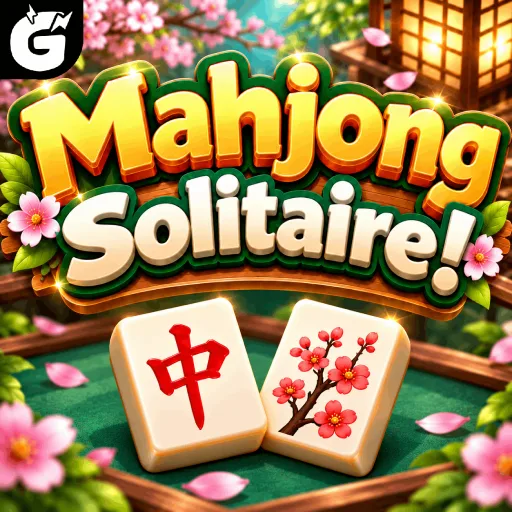
Play Mahjong Solitaire, a free online mahjong tile matching game. Clear the board by matching pairs of free tiles across three layouts - Garden with 60 tiles, Fortress with 100, and the classic 144-tile Turtle - with hints, shuffle, undo, and best times. Single player, no download, no sign-up.
More free games
Word Search

GeoSeeker
Pawdoku
2048
Minesweeper Classic
FreeCell Solitaire

Doodle Royale

VoxelGun.io
Snake Rush
Reversi Classic
Backgammon Classic
Carrom Rush

Canasta
Gomoku
Typing Practice
Dominoes

Duck Slide.io
Euchre

Brave Survivors
Shogi
Pinochle

Wild Bounty: Hunter 3D

3D Basketball Rush
8 Ball Legend

Cricket Clash
Chess
Mini Golf Rush 3D
Inkfall Defense

Car Rush

Checkers Classic
Four in a Row
Doodle Tower Defense
Daifugo
Zombie Survivor
DeveloperBrave Games
ModesSingle player
ReleasedJuly 2026
TechnologyHTML5
PlatformBrowser (desktop & laptop)
How to Play
Mahjong Solitaire is the classic tile-matching puzzle, free in your browser — rebuilt as a 200-level journey. Every board is a stack of mahjong tiles, and your job is to clear it by matching free tiles in pairs. A tile is free when nothing sits on top of it and at least one long side is open — so every match you make opens new tiles, and the whole game is about choosing pairs in the right order. Boards start small at 24 tiles and grow to 144 by level 200, laid out as pyramids, diamonds, crosses, butterflies, rings, fortresses, towers and waves, and new tile families join as you climb: bamboo, characters, then winds and dragons, and flowers and seasons from level 25. Clear a level inside its par time for three stars, bank coins and XP, and spend them on hints, shuffles and undos in the store — the three rescues for a board that locks up, because deals really can dead-end. Around the boards sits a full progression layer: daily tasks, achievements, chests that drop a 72-card collection, a weekly ranking, and an energy meter that spends one per level and refills over time. First launch starts with a three-tile tutorial, and the whole interface plays in English or Japanese. It runs with no download and no sign-up on any desktop or laptop browser. Pure single player: no opponents, just you and the tiles.
Browser Controls
- Match a Pair: Click or tap two matching free tiles to clear them from the board. A tile is free when nothing covers it and its left or right side is open — only those are selectable. Quick back-to-back matches build a combo that boosts your score.
- Hint: The 💡 Hint button briefly highlights a free pair. Hints are items, not a time penalty: you start with 3, earn more from daily tasks, chests, level-ups and milestones, buy them with coins in the store (3 for 90, 10 for 250), and when you run out the game offers one free every three minutes.
- Shuffle: 🔀 Shuffle rearranges the remaining tiles — the heavy rescue for a board that has locked up completely. It's an item too: 3 to start, 3 for 90 coins or 10 for 250 in the store, plus the same free claim when you're empty.
- Undo: ↩ Undo takes back your last match, puts both tiles back and removes that pair's points from your score. You start with 5; the store sells 5 for 60 coins or 20 for 200.
- Restart & Quit: The ↻ button restarts the current level with a fresh deal of the same shape — it costs 1 energy, like any start. The home button quits the level, and the energy you spent is not refunded.
- Settings: Toggle music, sound effects and visual effects, and switch the interface between English and Japanese (or Auto, which follows your browser) — the whole game, tile names and all, follows the choice.
Special Rules
- Free Tiles Only: You can only match tiles that are free — uncovered, with an open left or right side. Tiles buried under others or pinned between neighbors must be opened up first, and that ordering is the entire game.
- 200 Levels: Level 1 deals 24 tiles; the count climbs to 144 by level 200. Each level has a fixed shape — rectangles first, then pyramids, diamonds, crosses, butterflies, rings, X-shapes, fortresses, towers and waves — with a fresh deal every attempt. Tile families unlock as you go: dots and some bamboo at the start, the full bamboo suit from level 3, characters from level 8, winds and dragons from level 15, flowers and seasons from level 25. Levels open in order: clear one to unlock the next.
- Stars & Par Time: Every level has a par time. Finish within it for three stars, within 1.6× par for two, otherwise one — and the faster you clear, the bigger the time bonus added to your score. Your best score and best star count are kept per level, and a three-star clear pays 20 extra coins.
- Energy: Starting a level costs 1 energy from a meter of 10, which refills one point every 30 minutes. Out of energy? Wait, buy a refill with coins in the store (+1 for 50, +3 for 130, a full +10 for 300), or claim one free energy every three minutes. Restarting a level costs energy too, and quitting mid-level does not refund it.
- No Moves Left: If no matching free tiles remain, the game says so outright and offers two exits: Shuffle (uses one shuffle) or Undo. Deals can genuinely dead-end in mahjong solitaire; playing to avoid that corner is what separates good clears from lucky ones.
- Coins & Store: Each clear pays 30 coins plus a share of your score; the tutorial pays 50, and a free +100 coins can be claimed every three minutes from the coin bar. Coins buy boosters, energy, and Wood, Silver and Gold chests (100, 200 and 500 coins). Everything is in-game currency — there is nothing to pay for.
- Levels Unlock Features: Clearing boards earns XP and raises your player level, which opens the rest of the game step by step: Daily Tasks at Lv 2, Achievements at Lv 3, the Store at Lv 4, the Card Collection at Lv 5, your Profile and avatars at Lv 6, and the Weekly Ranking at Lv 7.
- Daily Tasks & Daily Chest: Four tasks reset every day — clear levels, match pairs, score points, and a rotating fourth (a three-star clear, using boosters, or claiming an achievement) — each paying coins and boosters. Complete all four to open the Daily Chest.
- Chests & the 72-Card Collection: Wood, Silver and Gold chests each hold three rewards (Silver has better odds, Gold guarantees a 3★ card). Cards fill a collection of 72 in eight themed sets; completing a set pays coins (some sets add hints), and all 72 pays a 5,000-coin grand prize plus 10 hints. Duplicates refund coins. The collection runs as a monthly season and starts over each month. Every tenth level cleared for the first time also drops a milestone chest with a hint and a shuffle.
- Achievements & Weekly Ranking: Twelve achievement tracks with three tiers each — levels cleared, three-star clears, pairs matched, total score, combos, par-time clears, clean clears without hints or shuffles, streaks, honor tiles, flowers, chests opened and tasks done — pay coins when you claim them. The Weekly Ranking adds up your score for the week against computer-controlled rivals, not other players, and hands out coins, boosters and a chest every Monday.
Tile-Matching Tips
- Work the Top and the Long Rows: Tiles high on the stack and in long horizontal walls block the most neighbors. Clear downward and inward — every tile you free up multiplies your options.
- Don't Grab the First Pair: When three of a kind are free, the pair you pick decides what opens next. Take one extra second to choose the match that unlocks the most buried tiles.
- Hunt the Fourth Tile: Every kind comes in pairs — before matching one, glance for its other twins. Burying a needed twin under a careless match is how boards die.
- Undo Before You Shuffle: A locked board is usually two or three greedy matches old. Undo back to the fork and pick differently — undos are the cheapest booster in the store, and they teach you more than a shuffle ever will.
- Play for Par: Three stars come from clearing inside the par time, and quick successive matches keep a combo running. Plan the next pair while the current one is animating, and keep hints for genuine dead ends rather than slow spots.
Frequently Asked Questions
What is Mahjong Solitaire?
Mahjong Solitaire is a single-player tile-matching puzzle played with mahjong tiles: the board starts stacked in a layout, and you clear it by removing matching free tiles in pairs until nothing remains. This free browser version runs it as a 200-level progression — boards grow from 24 tiles to 144 — with hints, shuffles and undo, three-star par times, daily tasks, achievements, chests and a 72-card collection. No download, no sign-up.
Is this the same as real mahjong?
No — they share the beautiful tiles but not the rules. Traditional mahjong is a four-player game of draws, melds, and scoring, closer to rummy. Mahjong solitaire is the single-player matching puzzle built from the same tile set: no opponents, no scoring hands, just you clearing the board pair by pair.
What does a 'free' tile mean?
A tile is free when no tile sits on top of it and at least one of its long sides — left or right — is open. Only free tiles can be matched, which is why the order of your matches matters so much: every pair you clear frees up new tiles and closes off nothing.
How do the flower and season tiles work?
They're the one exception to exact matching, and they join the deals from level 25. Flower tiles (plum, orchid, bamboo, chrysanthemum) and season tiles (spring, summer, autumn, winter) each carry their own design, and they match by group: any flower pairs with any flower and any season with any season, but a flower never pairs with a season. Spot one early and remember it, because its partner won't look identical.
How many levels are there, and what do the layouts look like?
200. Level 1 is a 24-tile rectangle and the count climbs to 144 by level 200, through pyramids, diamonds, crosses, butterflies, rings, X-shapes, fortresses, towers and waves. Each level keeps its shape but deals fresh tiles every attempt, and the tile families expand as you climb — bamboo, characters, winds and dragons, then flowers and seasons. You clear levels in order to unlock the next.
How do I get three stars?
Clear the board within the level's par time. Two stars means you finished within 1.6 times par, one star means you finished at all. Clearing fast also adds a time bonus to your score, and a three-star clear pays 20 extra coins; your best score and stars are saved for every level.
What is energy, and what happens when it runs out?
Energy is the meter at the top of the home screen: starting or restarting a level costs 1 of 10, and one point comes back every 30 minutes. When it's empty you can wait, buy a refill with in-game coins in the store, or claim a free energy — the game offers one every three minutes. Quitting a level early doesn't refund the energy you spent.
What happens if I run out of moves?
The game tells you plainly that no moves are left and offers two ways out: Undo, to rewind your recent matches and try a different order, or Shuffle, which rearranges the remaining tiles and uses one shuffle from your stock. Deals really can dead-end; that's part of the puzzle, not a bug.
Is there a hint if I'm stuck, and does it cost anything?
Yes — the 💡 button highlights a free pair. Hints no longer add time to your clock; they're items you collect and spend. You start with 3, pick up more from daily tasks, chests, milestones and level-ups, buy them with coins (3 for 90 or 10 for 250), and when you're out the game offers one free every three minutes.
Is mahjong solitaire good for your brain?
It's a gentle workout for visual scanning, short-term memory, and planning — you're constantly tracking tile positions and thinking a few matches ahead. It won't replace a crossword habit or a good night's sleep, but as a focused, calming few minutes of pattern-matching, it's earned its reputation.
Can I play against other people?
No — this is a pure single-player puzzle with no online play and no chat. The Weekly Ranking you unlock at Lv 7 compares your week's score against computer-controlled rivals and pays out every Monday; the only real opponent is your own best score on each level.
Is it free, and do I need to download anything?
Yes, it's completely free — Mahjong Solitaire on Playgami has no sign-up and no payment. Coins, chests and boosters are all in-game currency earned by playing; there is nothing to buy with real money. It's an HTML5 browser game that loads instantly: no downloads, no installs, no plugins.